





One dollar. That’s the price tag for a dream home with antique glass and beautiful woodwork. The catch? You have to transport it. House moving isn’t just a weekend DIY project. It involves lifting a structure off its foundation and relocating it, sometimes miles away.
This usually happens during building booms. Owners want bigger homes but don’t want to pay for demolition. Giving the old house away saves money. It also keeps materials out of landfills. Environmental benefits aside, there are other reasons to relocate a structure.
Flooding is a major driver. If a property is in a flood zone, moving the house to higher ground makes sense. Development also forces moves. Encroaching shopping centers or new highways can block access. Historic preservationists move homes to save them from demolition when the land is repurposed. Some moves are trivial. Maybe you just hate the view. Or the neighbors.
It’s not cheap to fix a neighbor problem. Before you dig in, check the finances. Is moving cheaper than building new? What are the limits? Can you move any home anywhere?
When to Raise Instead of Move
Nowhere to go but up. House raising doesn’t involve long-distance travel. It’s an elevation project. The process mirrors house moving but stops short of transport.
The ground below is excavated. This creates space for expansion downward. New flooring is installed. A new foundation is poured. The home is set back down on the upgraded base.
Why do this? A damaged foundation requires it. Or perhaps you want more space. Raising costs significantly less than building on top of the structure. Savings can reach 50 percent. It’s a practical alternative when distance isn’t the issue.
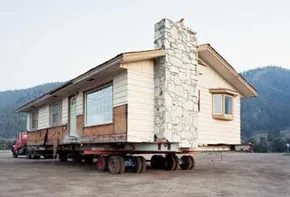
The heavy lifting doesn’t start when the trucks show up. It starts in the paperwork. Moving a house is less about brute strength and more about bureaucratic maneuvering and engineering precision. You need to coordinate with local planning departments before a single wheel turns. They need to verify the move is legal and issue permits for both the departure and arrival sites. Inspectors will likely inspect the structural integrity of the house. Contractors will probably need to pour a new foundation at the destination. Local or state transportation departments must also approve the route. You can’t just drive a mansion down Main Street without clearance.
Money is another hurdle. You have to notify the bank or company holding the mortgage. They need to approve the process. If you require a construction loan to cover the moving costs, the application takes longer. You’ll need to explain the logistics to the lender. Banks get nervous when their investment is being pulled down the road. They want to know the asset is secure.
Hiring professionals helps you jump through these hoops. House moving is conducted by experienced professionals. They have the proper equipment. They have the structural expertise to keep the home safe. Search for a house moving company by consulting the International Association of Structural Movers’ database. Their members are vetted.
A house mover handles the engineering calculations. They decide how to move the home safely. They also tell you if moving a home makes good financial sense. The structure, the route, and the new site must be carefully considered.
Before calling, have this information ready:
- The width, length, and height of the home
- How the house was built, which helps determine weight
Generally, a brick home is more expensive to move than a wooden one. Larger homes cost more than smaller one-story buildings. Movers can pick up almost any building, including giant mansions. This information helps you determine if the move is worthwhile.
You’ll also need blueprints or planning documents. These provide details on structural elements like the foundation and support beams. The mover uses this to determine what structural support is needed during the move. Tell them if you intend to take additions like garages or porches. These can usually be moved simultaneously if supported properly. Brick structures like fireplaces and chimneys can sometimes be moved. Their weight adds to the cost. Some builders recommend removing them and re-bricking at the new site.
Movers will visit the home in person to figure out these details. They want to see more than just the structure. The route is an important factor in feasibility. It is a major driver of cost.
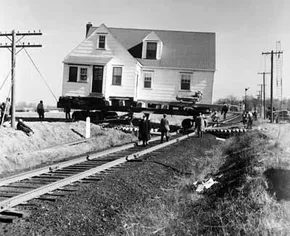
The route matters more than the rig. You can buy the biggest trailer and hire the heaviest winches, but if your path is choked by trees, mailboxes, or tight turns, you’re stuck. A house mover’s gear handles weight. It doesn’t handle geometry.
Longer trips multiply these problems. Every town your home crosses demands a permit. Some municipalities ban daytime moves entirely. You might only move under cover of darkness or on weekends to avoid traffic. Utility lines are the silent killers of cheap moves. Anything taller than one story risks snagging on low-hanging wires.
You can try to clear the path yourself. Prune branches. Move mailboxes. But utility companies charge a premium to lift their own lines. This is often the single largest unexpected expense. For wider homes, disassembly is an option, but the structure must be strong enough to survive being cut apart. It adds cost. It adds risk.
The cheapest houses to move are small. They travel short distances on clear roads. If your home is large, or the route is a maze of curves and crossings, you have to do the math. At what point does the moving bill exceed the home’s value?
On the East Coast, density forces local moves. It’s too expensive and complicated to go far. Out west, in the spread-out Midwest, homes travel hundreds of miles. Cross-country moves are logistical nightmares. They usually require taking the house apart piece by piece to meet varied road regulations.
Understanding the True Cost of Relocation
The base rate starts around $12 to $16 per square foot. But that number is a lie. It assumes a perfect scenario. A heavy, large house traveling far will shatter that estimate. Moving a substantial home just a few miles can easily hit $150,000 to $200,000.
Don’t forget the ancillary costs. These are where budgets die:
- Land acquisition: You need a place for the house to land.
- Foundation work: You can’t just set it on dirt. A new foundation is non-negotiable.
- Permits and inspections: Every jurisdiction wants its cut.
- Utility disconnects: Plumbers and electricians must disconnect major services. Reconnection costs add up fast.
- Code compliance: Your new town may demand renovations to meet current building codes. If the house is outdated, you might need to upgrade plumbing or electrical systems just to keep it legal.
If you’re still in it, it’s time to get your hands dirty. The engineering phase begins now.
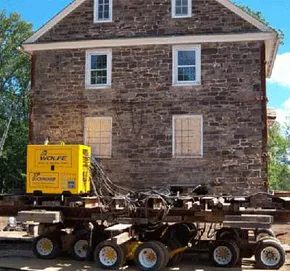
Preparing the Structure for Lift
Before the heavy lifting begins, you have to clear the way. Utilities need to be shut off, and usually, that means calling in a pro. A plumber or electrician handles the disconnection so you don’t risk electrocution or flooding later. Then there’s the space. Movers need at least 10 feet of clearance around the perimeter for excavation. If you have trees or shrubs you want to keep, dig them out now. Otherwise, you’re going to lose them to the bulldozer.
Once the perimeter is clear, the crew cuts openings into the foundation walls. This is where the real engineering happens.
The Mechanics of Lifting
You can’t just lift a house with brute force. You need steel beams inserted into those foundation cuts. These aren’t standard lumber. They are structural supports that bear the entire weight of the structure. If they are sized incorrectly or placed poorly, the house could crack or collapse under its own mass.
Support doesn’t stop there. Wooden cribs —stacks of interlocking posts—are set up inside and outside the perimeter to stabilize the load.
“The system is known as a unified hydraulic jacking system because there’s a central control for monitoring each jack’s performance.”
Underneath the steel beams, the crew places hydraulic jacks. These are the same type used to lift cars, but scaled up and linked together. This setup is called a unified hydraulic jacking system. Why does that matter? Because a central computer monitors every jack. They all rise and lower at the exact same rate, regardless of the weight distribution. This keeps the home perfectly level during the lift.
The Long Road to the New Site
Once the house is suspended in the air, the crew slides beams underneath to transfer the weight to special dollies with rubber tires. These dollies attach to a heavy-duty truck.
The move itself is slow. Painfully slow. It can take several days to cover a short distance. Crews walk alongside the truck, lifting power lines, mailboxes, and low-hanging branches, then reinstalling them after the house passes.
The good news? You don’t have to pack everything. Most furniture stays put. The vibration is minimal. Movers have stories of open soda cans arriving without spilling a drop. Sleeping cats haven’t even stirred.
Setting Down and Restoring
When the truck finally reaches the new site, the house doesn’t go down immediately. It stays jacked up while a new foundation is poured and cured. Only once the concrete is solid is the home lowered into place. Then, the utilities are reconnected. If done right, the structural integrity remains exactly as it was when you started.
Moving Mobile Homes
Prefabricated homes and trailers are built to move, but don’t let that fool you into thinking the process is easier. They require just as much prep.
Mobile homes are jacked up, but the setup is slightly different. Axles and wheels are attached directly to the steel beams already running through the structure. A tongue (or pole) is usually pre-installed, connecting the home to the pulling truck.
If you’ve ever been stuck behind a mobile home on the highway, you know the pace. It crawls. Drivers have to maintain steady control. Sudden stops at high speeds can damage the structure. Permits are mandatory and come from local planning offices.
Double-wide or triple-wide units cost more to transport. There are more pieces to move and more complex assembly required when they arrive. It’s not just about getting it there. It’s about putting it back together without the walls bowing in.