

Target Value Design (TVD) постійно забезпечує виконання проектів на 15-20% нижчими за типові ринкові ціни, одночасно підвищуючи передбачуваність витрат і зменшуючи потребу у великих резервних коштах. Це невипадково: існує чітка модель, яка пояснює чому TVD працює, а традиційні підходи часто зазнають невдачі.
Проблема з традиційними витратами на будівництво
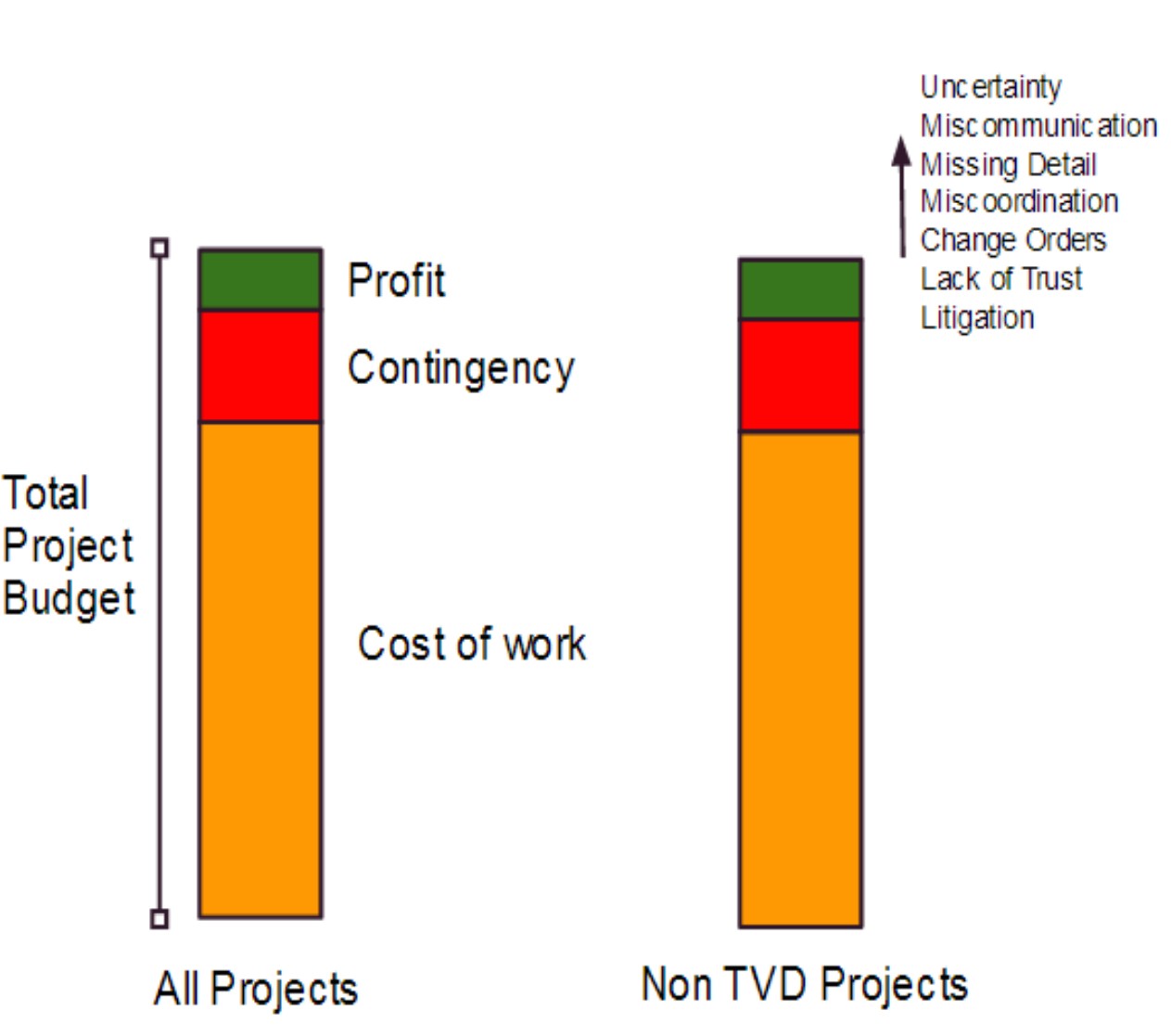
Більшість будівельних проектів будуються на основі фрагментованих стимулів. Дизайнери отримують погодинну оплату без жодного стимулу для зниження витрат. Підрядники можуть використовувати недоліки в планах (юридично, як встановлено у справі Спірін проти Сполучених Штатів, 1918 р.), щоб виставляти дорогі рахунки. Власник зрештою оплачує рахунок за неправильне спілкування, невпевненість і погану координацію.
Справа не в зловмисних намірах – справа в системі. Без спільних ризиків немає стимулів для мінімізації відходів або ефективної співпраці.

Малюнок 1: Структура вартості проекту, що показує, як сили додають до загальної вартості.
Рішення TVD: спільні ризики, спільні вигоди
TVD інвертує цю модель. Проектувальники та підрядники об’єднують свої прибутки в загальний пул ризиків. Якщо проект завершено нижче бюджету (за умови виконання умов власника), усі ділять заощадження. Якщо проект виходить за межі бюджету, прибуток усіх скорочується. Таке негайне вирівнювання стимулів підвищує ефективність.
TVD також заохочує спільні підходи, такі як проектування-будівництво або інтегрована реалізація проекту (IPD). Ці методи підкреслюють раннє залучення підрядника, спільне розміщення та цифрове моделювання (BIM), щоб зменшити кількість помилок і покращити комунікацію.

Малюнок 2: Сили, які збільшують і зменшують витрати на проект.
Фізична аналогія: сили та імпульс
Подумайте про такий будівельний проект, як фізика. Ісаак Ньютон показав, що сума сил визначає імпульс тіла. Подібним чином сума сил (позитивних і негативних) визначає траєкторію витрат проекту.
У традиційних проектах часто немає сил, які знижують витрати. TVD активно впроваджує їх: співпрацю, узгоджені стимули та розподіл ризиків. Хоча такі ризики, як неправильне розуміння, все ще існують, TVD створює протидіючу силу для їх пом’якшення.
Головний висновок
Вартість будівництва не фіксована, а є динамічним результатом. На будь-якому етапі існують можливості заощадити гроші, але також є ризики, які можуть збільшити витрати. TVD не усуває ризики, але змінює систему таким чином, щоб кожен виграв від їх контролю.
Вирівнюючи стимули та заохочуючи співпрацю, TVD докорінно змінює діючі сили, роблячи перевищення витрат менш ймовірним і передбачувану економію більш досяжною.
Ця модель не лише теоретична – вона перевірена на практиці. TVD – це не зрізання кутів; це розумніша конструкція.