



The gray chill of late November usually signals the end of the gardening show. Lawns go dormant. Borders look ragged. The French massifs feel heavy with cold. But there is a trick. A quiet, spectacular trick that happens at dawn. Have you ever walked out early and seen flowers that looked invisible the day before? Now they are glowing. It is the first frost. That icy veil turns common plants into something else entirely. It reminds us that the winter garden holds its best surprises deep in the cold season.
The unexpected metamorphosis of ordinary flowers
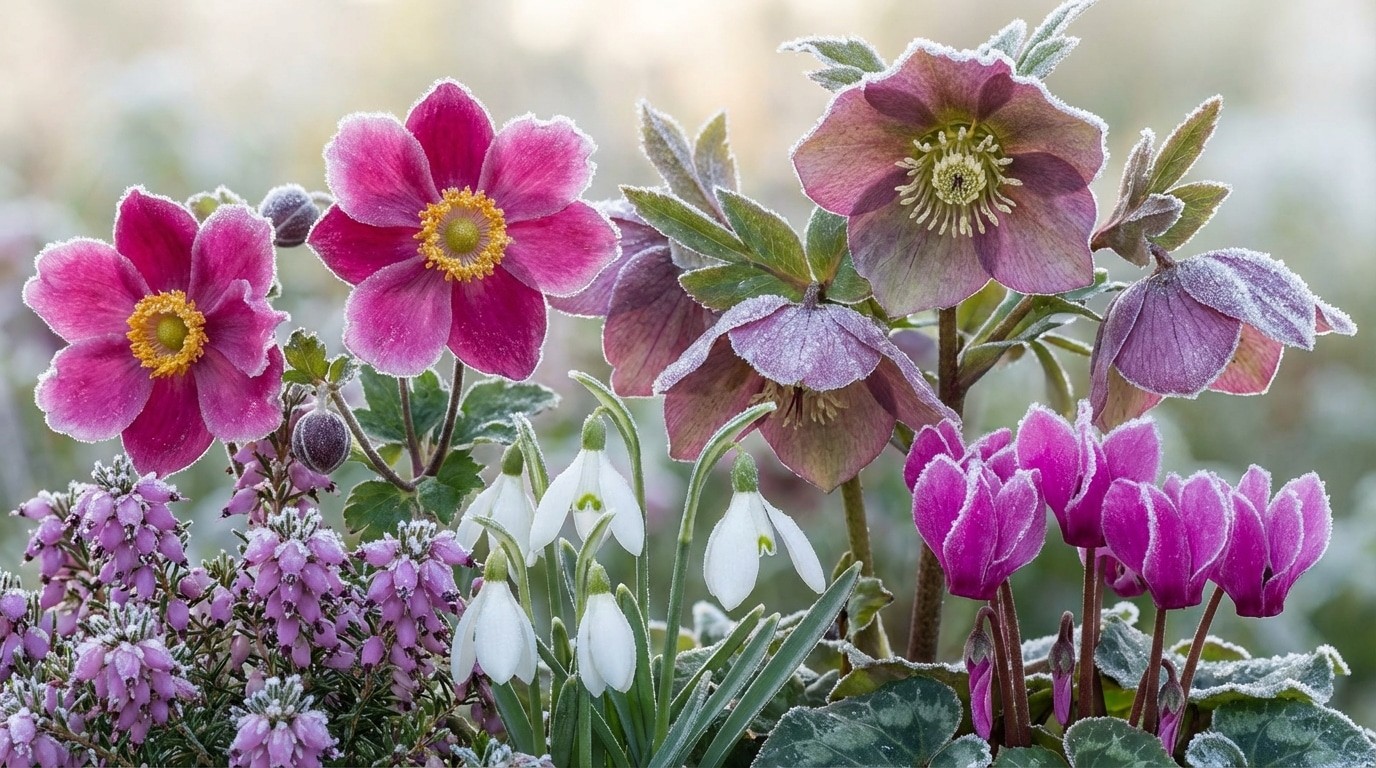
The first freezes of late November do not kill the garden. They change it. The frost acts like a spotlight. It dresses vegetation in a sparkling coat that highlights every tiny detail. Flowers look sharper. Their shapes become defined. A simple border can suddenly feel like a serene, moonlit garden. This is not death. It is transformation. The cold brings out a contrast that heat never could.
How frost reveals color and texture
When the sun comes up, frozen dew creates dramatic effects. Some petals turn translucent under the ice. Others take on intense, almost flaming colors. A bed you ignored in autumn might now command attention. This ephemeral display gives the landscape design a new dimension. It works on north-facing slopes. It works on exposed terraces. The garden becomes a living sculpture.
Japanese anemones and hellebores: winter queens
Japanese anemones are often seen as plain in summer. They look tired. They look ordinary. But frost changes everything. After the first freeze, their petals seem to glow with a silver reflection. Wind-tossed stems in autumn stand tall under the ice. They offer a living tableau at sunrise. These plants do not just survive the cold. They thrive in it.
Hellebores, or Christmas roses, are less famous but equally fascinating. Their quiet blooms are sublimated by the cold. While the rest of the garden sleeps, hellebores hide in shade or hedge edges. They wear sparkling crystals. Their deep green leaves, sometimes nearly black, offer a bold alternative to traditional lawn grass. They prove that winter plants can have nobility.
Snowdrops, heathers, and cyclamens: the invincibles
Snowdrops are the symbols of winter renewal. They push through frozen soil in late November. Their white clusters pop against frosted lawns. Cyclamens are no softer. They flower against the current. Even when the thermometer hits zero, their marbled foliage and bright corollas hold strong. These are the tough ones. The survivors.
Heathers usually stay in less exposed corners. After a cold night, they become stars of the Mediterranean-style winter garden. Pink or purple blooms gain intensity. They create a living carpet along borders or in pots on the terrace. This is an economical trick. You get structure and color without excessive maintenance or summer watering.
How to prepare your garden for this winter spectacle
You do not need magic to get this effect. You need preparation. Clean beds in early autumn. Keep a light mulch to protect roots from deep freezing. Cut the lawn higher before the first frost. This frames the borders where anemones, hellebores, heathers, and cyclamens sit. Short grass hides them. Tall grass highlights them.
Small gestures that make a big difference
During cold snaps, do not overwater. A slightly dry soil helps plants endure freezing without wilting. For extra visual impact, place stones or logs near the beds. Frost catches the light on these hard surfaces. It structures the gaze. It adds intimacy to a shaded corner or an urban border. These simple steps let the plants do the work.
Why winter blooms matter
The charm of the winter garden lies in these quiet blooms. They are woken by the first frosts of November. They turn the ordinary into the extraordinary. With Japanese anemones, hellebores, snowdrops, heathers, and cyclamens, even a modest garden can offer striking beauty. No complex care. No unnecessary watering. Just nature doing what it does best.
Next time the frost comes, look closer. The flowers you thought you knew are different now. Their winter metamorphosis invites you to enjoy the neglected season. The nature reserves its best shows for those who pause to watch. The ice is still forming. The light is shifting. The garden is waiting.