



You’ve probably never heard of the Circle of Sinners. It sounds like a secret society or a bad movie sequel, but it’s actually one of the most important concepts in home renovation. If you’ve ever started a DIY project, only to find yourself spending twice as much time and money as you planned, this is why.
The concept is simple. Most homeowners, designers, and contractors get caught in a loop of unrealistic expectations. You start with a dream. Then reality hits. Then comes the stress. Finally, you deliver something that’s just “okay,” and you’re exhausted.
It’s a cycle. And it’s easy to break if you know what’s coming.
The First Loop: The Dream
It starts in the shower. Or maybe at a coffee shop. You’re looking at a tile pattern online and thinking, I could do this. It’s easy. It’s pretty. It’ll take a weekend.
This is the first circle. You imagine the finished space. You see the light hitting the new backsplash. You hear the quiet hum of a perfectly installed range hood. You don’t see the dust. You don’t see the 47 trips to the hardware store. You just see the result.
“We all start here. With a vision that feels achievable because we’ve only seen the highlight reel.”
The problem isn’t the vision. The problem is ignoring the friction.
The Second Loop: The Reality Check
You buy the materials. You clear the room. You start the demo.
Suddenly, you realize the wall isn’t straight. The old pipes are corroded. The tile you ordered is backordered. Or worse, you cut the first board, and it’s wrong.
This is the second circle. The dream collides with physics. With deadlines. With your own lack of experience.
You spend more time than expected. You go over budget. You’re frustrated. You start to wonder if you should have just hired a pro. But you’re already in too deep to quit. So you push through.
The Third Loop: The Delivery
You finish. It’s not what you imagined. The grout lines are uneven. The paint color looks different in the afternoon light. The cabinet doors don’t quite align.
But you’re tired. You’re broke. You’re done.
You deliver the project to yourself. And you accept it. Not because it’s perfect. But because you survived.
This is the third circle. The acceptance of “good enough.”
How to Break the Cycle
You don’t have to stay in the Circle of Sinners. Here’s how to break free.
1. Underestimate your time. Overestimate your budget.
Double your time estimate. Add 20% to your budget. This isn’t pessimism. It’s preparation.
2. Start with a small project.
Don’t begin with a full kitchen remodel. Start with a bathroom vanity. Or a single wall. Learn the tools. Learn the mistakes. Build confidence.
3. Plan the details.
Not just the big picture. The small stuff. Where does the outlet go? How does the trim meet the baseboard? What tool do you need for the specific screw type?
4. Accept imperfection.
How the Sinner Circle balances cleaning variables
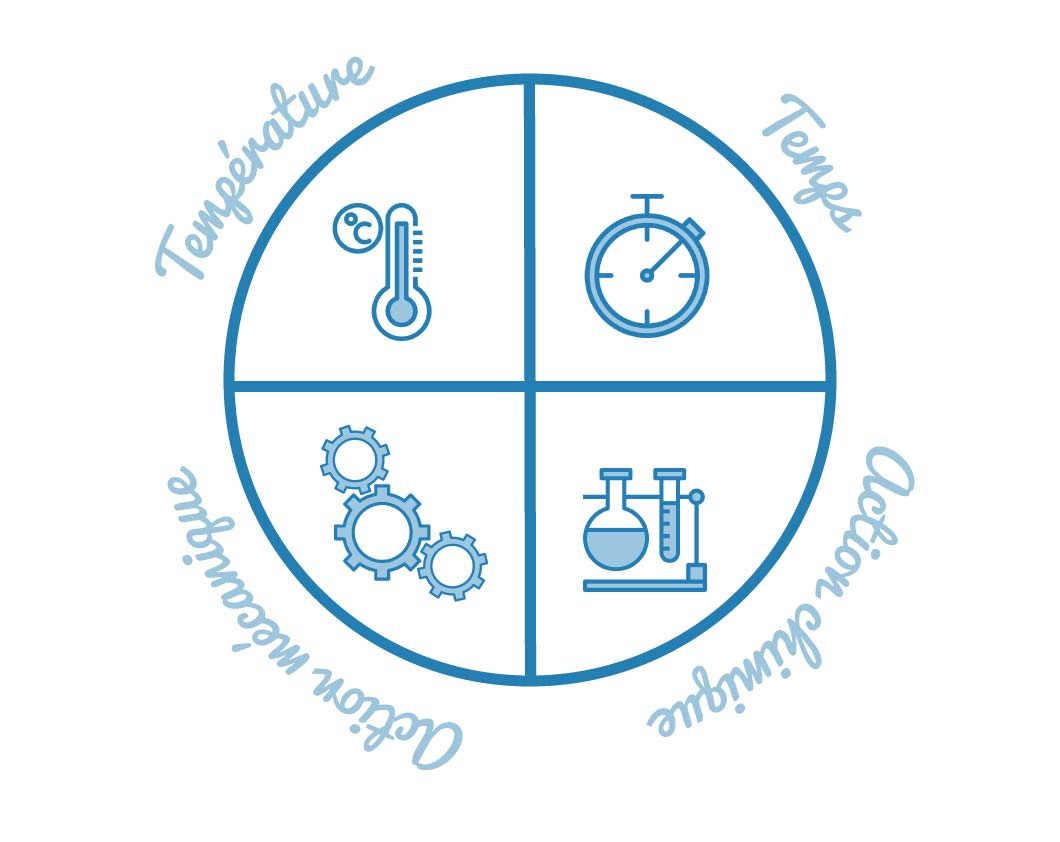
The Sinner Circle isn’t just a diagram. It is a practical framework for understanding why some cleaning methods work while others fail. Developed by chemist Herbert Sinner, the model maps the interaction between four critical factors: mechanical action, time, temperature, and chemical action.
The core rule is simple. If you increase one factor, you must decrease the others to maintain the same cleaning result.
This balance is what defines the Sinner circle equation in practical terms.
Think about washing dishes. You are likely familiar with the struggle of scrubbing grease off a cold plate.
If you turn down the temperature, you remove heat from the equation. The grease won’t melt. It won’t emulsify. You are left with a hard, waxy residue.
To compensate for the lack of heat, you have three options.
- You can increase mechanical action. You scrub harder. Your arms get tired.
- You can increase chemical action. You use more detergent to break down the bonds.
- You can increase time. You let the dishes soak. The hot water does nothing now, but the chemical action works slowly over hours.
Conversely, if you turn up the heat, the dynamic shifts. Hot water breaks down grease naturally. It lowers the surface tension. It makes the detergent more effective.
Because the temperature factor is now high, you can reduce the other inputs. You don’t need to scrub as hard. You can use less soap. You can wash the dishes faster.
The total cleaning effect remains constant. The variables just shift positions.
This principle applies to every cleaning task in a home. It explains why a pressure washer works on a driveway. The high mechanical force allows for less chemical usage. It explains why an oven cleaner needs dwell time. The chemical action needs hours to eat through carbonized food, even if the surface is cool.
Understanding this circle prevents waste. It stops you from using expensive products when heat or time would suffice. It stops you from exhausting yourself when a little warmth would do the job.
The relationship is inverse. Always.
Increase one. Decrease the rest.
It sounds theoretical until you are standing in a kitchen at 8 PM, staring at a pan of burnt cheese. You can scrub until your knuckles bleed. Or you can add water and let it sit. The circle dictates the choice.
The variables are not isolated. They pull on each other.

Why Water Temperature Matters in Your DIY Clean
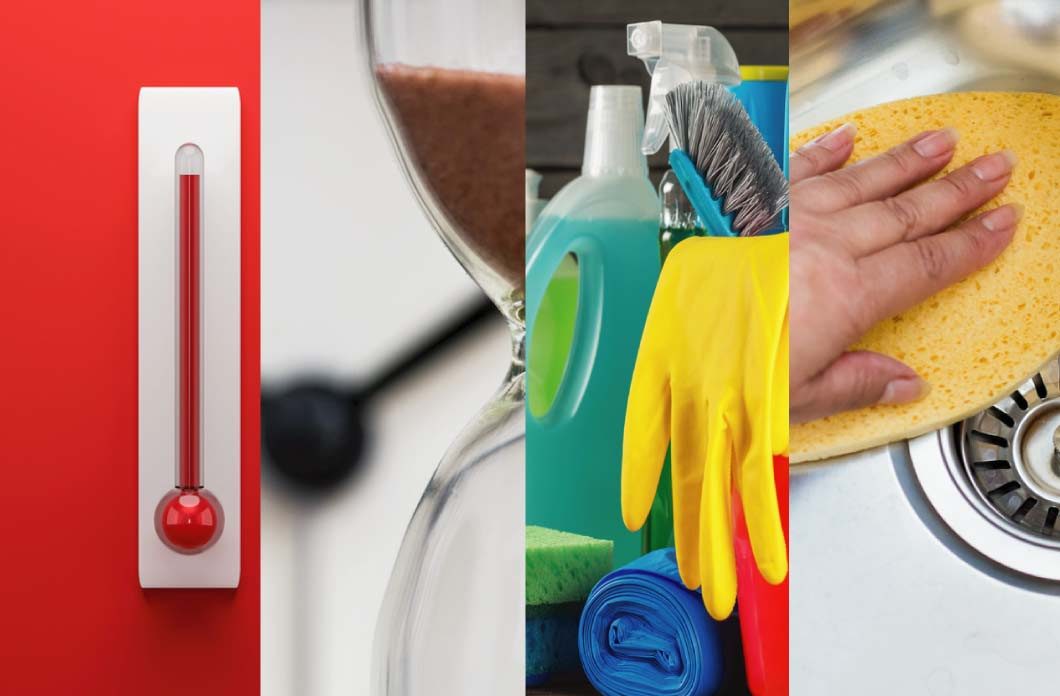
Heat changes everything. It’s not just about comfort; it’s chemistry. The temperature of your water directly dictates how well a cleaner works. You can’t just turn the tap on hot and hope for the best. You have to match the heat to the product, the surface, and the grime.
Hot water is usually the go-to. Why? Most detergents need it. Heat activates the active ingredients. It also tackles grease. Grease melts. It becomes soluble. Hot water lifts oil and fat off surfaces much faster than cold ever could.
But cold water isn’t always the enemy. Sometimes, it’s the only option. Chlorine-based disinfectants work better in cool water. Hot water can break them down before they do their job. Then there’s protein. Blood, egg, dairy. Heat coagulates protein. It cooks it into the surface. Once that happens, scraping it off is a nightmare. Cold water keeps proteins loose. They rinse away.
The Time

Le temps de contact : pourquoi attendre rend tout plus simple
On pense souvent que le nettoyage est une course contre la montre. Frotter fort, vite. Mais dans le cercle de Sinner, le temps n’est pas un ennemi. C’est un levier. Plus précisément, il s’agit du temps de contact. Cette durée pendant laquelle l’agent nettoyant reste en interaction avec la surface.
Prenons la vaisselle à la main. Les taches les plus opiniâtres, celles qui semblent incrustées au fond de la casserole, ne partent pas toujours sous la pression du doigt. Laissez-les tremper. L’eau chaude et le détergent ont besoin de minutes, parfois d’heures, pour ramollir les protéines carbonisées ou les graisses figées. Une fois ce temps de contact respecté, la saleté se détache presque seule. Résultat ? Moins de friction sur les mains, moins de produits jetés dans l’évier, et surtout, un nettoyage efficace sans épuisement physique.
La logique s’applique aussi aux machines. Un cycle de lavage de linge de deux heures nettoiera généralement mieux qu’un cycle express de trente minutes. Pourquoi ? Parce que l’eau a le temps de pénétrer les fibres, de dissoudre les salissures et de les évincer. Si vous visez la rapidité, vous devez compenser ailleurs. Augmenter la température. Intensifier l’action mécanique. Ou concentrer votre produit. Le temps est flexible. Mais il n’est pas gratuit.
L’action chimique
C’est ici que les choses se corsent. La force chimique. Souvent négligée au profit du frottement ou de la chaleur, elle est pourtant la clé de voûte de tout nettoyage moderne.
Choisir le bon produit n’est pas une question de marque. C’est une question de compatibilité chimique. Un nettoyant pour four ne fonctionnera pas sur une tache d’encre. Un détartrant à base d’acide va ronger l’aluminium. Il faut comprendre la nature de la saleté et la nature de la surface.
Les tensioactifs dans vos détergents agissent comme des ponts. Ils attirent l’eau d’un côté, la graisse de l’autre. Ils brisent la tension superficielle. Mais si le pH est inadapté, si la concentration est trop faible, rien ne se passe. La chimie ne négocie pas. Elle réagit ou elle reste inactive.
Pour le bricoleur ou le parent qui nettoie des outils encombrés ou des vêtements de chantier, ignorer cet aspect coûte cher. Acheter trois produits différents au lieu d’un seul adapté. Gaspiller du temps à rincer sans fin. La bonne chimie réduit le nombre d’étapes. Elle agit en profondeur. Elle permet aux autres forces du cercle de travailler avec moins d’effort.
La question n’est donc pas « quel produit sent le mieux ? ». La question est « quelle réaction chimique ma saleté nécessite-t-elle ? ». Alcalin pour les graisses. Acide pour le calcaire
The Role of Mechanical Action
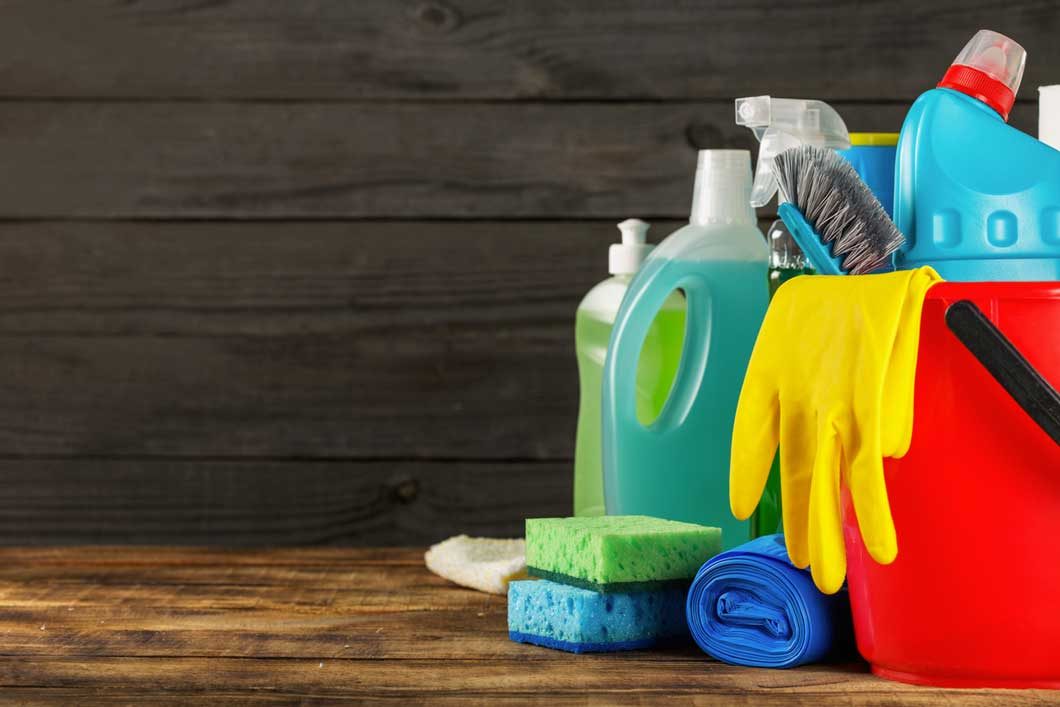
Chemicals do the heavy lifting by suspending dirt, but they need a partner. That partner is mechanical action. It’s the physical force you apply to break the bond between the grime and the surface. Without it, even the best detergent just sits there, doing nothing.
Think about scrubbing a burnt-on mess on a glass cooktop. You could rub until your arm falls off, but you’ll only risk scratching the surface. The chemical agent—specifically designed for carbonized residues—breaks down the bond. The mechanical action lifts it away. Too much force without the right chemistry? Damage. Too much chemistry without any force? Stains remain.
The key is balance. You are not trying to destroy the surface; you are trying to remove the layer on top of it. This requires choosing the right tool for the job. A soft microfiber cloth works for light soil. A non-abrasive nylon brush handles heavier buildup. Steel wool? Avoid it on anything delicate like stainless steel or glass. You will leave scratches that collect dirt later, making the next cleaning job twice as hard.
Mechanical action is the physical removal of soil. Use the least aggressive method that gets the job done.
How to Combine Chemical and Mechanical Forces
Most DIYers make the mistake of applying too much pressure before letting the product work. Stop. Let the chemistry happen first.
Spray the cleaner. Wait. Give it thirty seconds to a few minutes, depending on the product instructions and the type of stain. Grease needs time to emulsify. Soap scum needs time to dissolve. Proteins need time to break down. Once the chemical action has done its job, the mechanical action becomes easier. You use less force. Less force means less risk of damage.
When you’re cleaning windows, for example, a squeegee provides the mechanical action. The soapy water provides the chemical action. If you skip the soap and just drag the squeegee, you’ll streak. If you use soap but no squeegee, you’ll dry in spots. Both are necessary.
This principle applies to laundry too. The wash cycle provides the mechanical agitation. The detergent provides the chemical breakdown. If you overload the machine, there’s no room for agitation. The clothes don’t move enough. The dirt stays. You have to leave space for movement. Same with dishes in the sink. If you pile them too high, the water and soap can’t reach everything. The mechanical spray from the dishwasher or the hand-washing motion needs clearance.
Choosing the Right Tools for Mechanical Action
Your toolkit should be specific. Generic scrubbing pads cause more problems than they solve.
- Microfiber cloths: Best for wiping away suspended dirt. They trap particles rather than pushing them around.
- Nylon brushes: Good for grout lines and textured surfaces where a cloth won’t reach. Check the bristle stiffness. Soft bristles for painted surfaces. Medium for tile grout.
- Plastic scrapers: Essential for removing dried-on food or stickers from glass or metal. Always hold the blade at a 45-degree angle. Never dig straight in.
- Sponges: Use the abrasive side sparingly. It wears down quickly and can leave micro-scratches on glossy finishes. Reserve it for heavy-duty oven interiors or ceramic
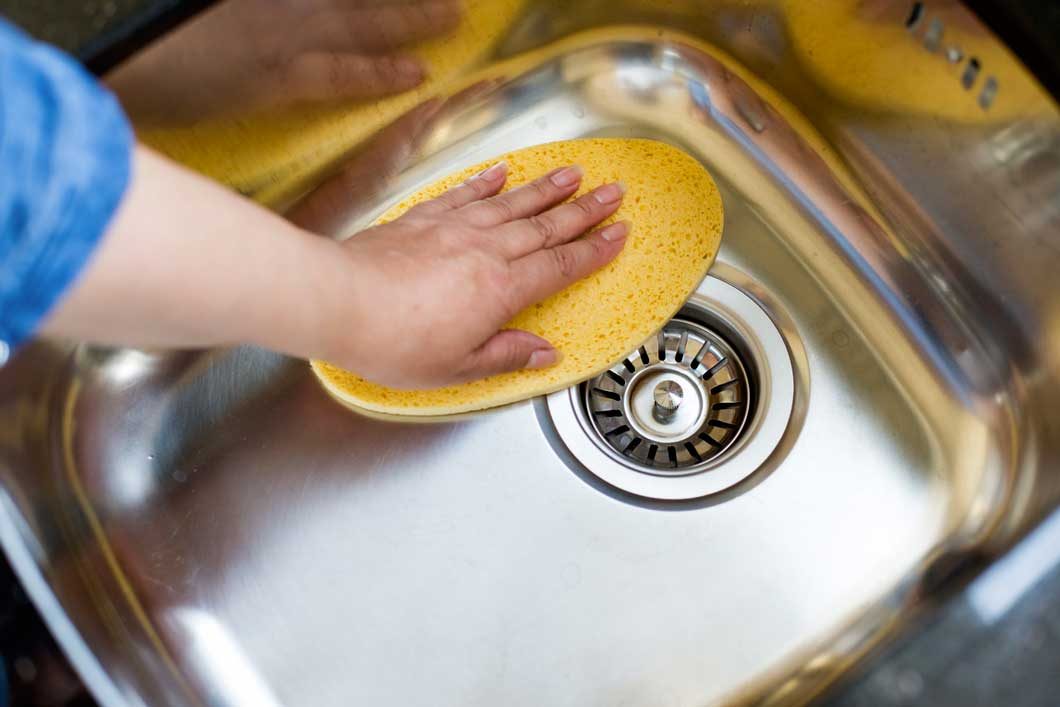
Le frottement ne naît pas du vide. Il est le produit chimique de trois forces qui s’additionnent : la pression de contact, l’abrasion du matériel et la fréquence du mouvement. Oubliez la force brute aveugle.
Prenons l’éponge métallique. Elle est abrasive. Haute friction. Elle arrache la crasse sans que vous ayez à presser fort ni à recommencer cinquante fois le même geste. Le prix à payer ? Des rayures inévitables sur votre surface.
La classique éponge verte, elle, est douce. Moins abrasive. Pour obtenir le même résultat, vous devez pousser plus fort. Et recommencer. Encore. Et encore.
Il y a un équilibre ici. Un triangle invisible.
Le cercle de Sinner en pratique
Ce concept vient de l’industrie. Les professionnels l’utilisent pour réduire les coûts, économiser l’énergie et optimiser la main-d’œuvre. Mais les principes de base du cercle de Sinner fonctionnent aussi parfaitement chez vous. Dans votre cuisine. Sous votre douche.
Vous l’appliquez déjà. Vous ne le savez peut-être pas.
Le programme de lavage écologique
Les machines modernes intègrent systématiquement des cycles « éco ». La durée du lavage augmente. La température baisse. Pourquoi ?
Moins d’énergie pour chauffer l’eau. Le même résultat de propreté. C’est un arbitrage classique du cercle de Sinner : compenser la baisse de température par l’augmentation du temps de contact.
Les nettoyeurs à vapeur
Ici, on pousse la température au maximum. La vapeur décape, décollle, dissout. L’action mécanique est presque nulle. Les détergents chimiques, optionnels. Parfois inutiles.
C’est net. Rapide. Moins de produits à stocker. Moins de rinçage.
Les nettoyeurs hautes pression
L’eau sous forte pression crée une force mécanique brute. Elle peut, à elle seule, nettoyer efficacement. Terres battues. Terrasses. Allées.
Parfois, l’eau froide suffit. Le temps passé est court. Les autres paramètres (produit, température) sont absents. L’impact reste fort.
La question n’est pas de tout maximiser. Elle est d’ajuster les leviers selon la tâche.
Le cercle de Sinner invite à la précision. Pas à l’excès.