



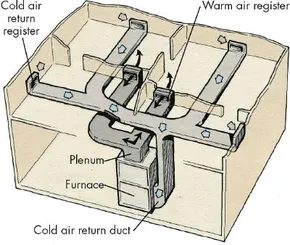
A forced-air system sounds complicated, but it’s just a loop. Heat or cold air gets pushed by a blower through a network of ducts. It reaches your rooms via registers. The same blower pulls the air back from those rooms, sends it to the furnace or AC coil, and cycles it all over again.
This setup works for both heating and cooling. You use the same ducts, the same registers, and the same blower motor for winter warmth and summer chill. That shared infrastructure is efficient. It’s also relatively trouble-free.
The Two Biggest Headaches
When forced-air systems fail, it’s usually for two reasons: noise and blockage.
Blockage is the easy one to fix. It happens when dirt accumulates. It happens when you shove furniture in front of a vent. It happens when heavy drapes hang over a register and choke off airflow.
Noise is the other issue. rattling ducts or whistling air. Usually, that means something is loose. Or airflow is restricted.
Regular cleaning and maintenance prevent both. If you ignore the system, it degrades. The blower works harder. The filters clog. The ducts get dusty.
How to Disassemble Registers and Ducts
The good news? These systems are built to come apart. You don’t need specialized tools to take them down for cleaning.
Floor registers are simple. Most slip directly into the duct opening. Some are held by retaining screws on the frame. If there are screws, unscrew them. Lift the register out.
Wall and ceiling registers are similar. They’re typically secured by retaining screws on the frame. Remove the screws. Pull the register away from the wall or ceiling.
Duct joints connect via slip-fit. The larger end of one piece slides over the smaller end of the next. They’re usually sealed with sheet-metal screws or heavy-duty duct tape. If the tape is failing, the joint might leak air. You can remove screws or cut old tape to separate the sections.
Supports hold the ducts in place. Wire hangers or metal straps nail or screw into wooden framing like studs and rafters. You can unbend wire or unscrew straps to drop the ducts for access.
Reassembly Matters
Don’t just toss everything in a pile.
Lay parts out in order as you work. Note which register goes where. Mark duct sections if they aren’t identical. You’ll need to put it back together exactly as it was.
Clean the registers. Vacuum the ducts if you can reach them. Check for debris. Clear any blockages.
Once cleaned, reassemble in reverse order. Secure screws. Tape joints. Hang ducts.
Temperature Imbalance
You might notice something else. One room is freezing. Another is sweltering. The temperature varies widely between spaces.
This is a common forced-air problem. It usually points to a deeper issue than just dirty ducts. Airflow might be unbalanced. Dampers might be closed. Or the system might be undersized for certain areas.
Fixing that requires a different approach. We’ll look at how to balance air pressure and adjust dampers in the next section. For now, get the basics clean. Clear the